

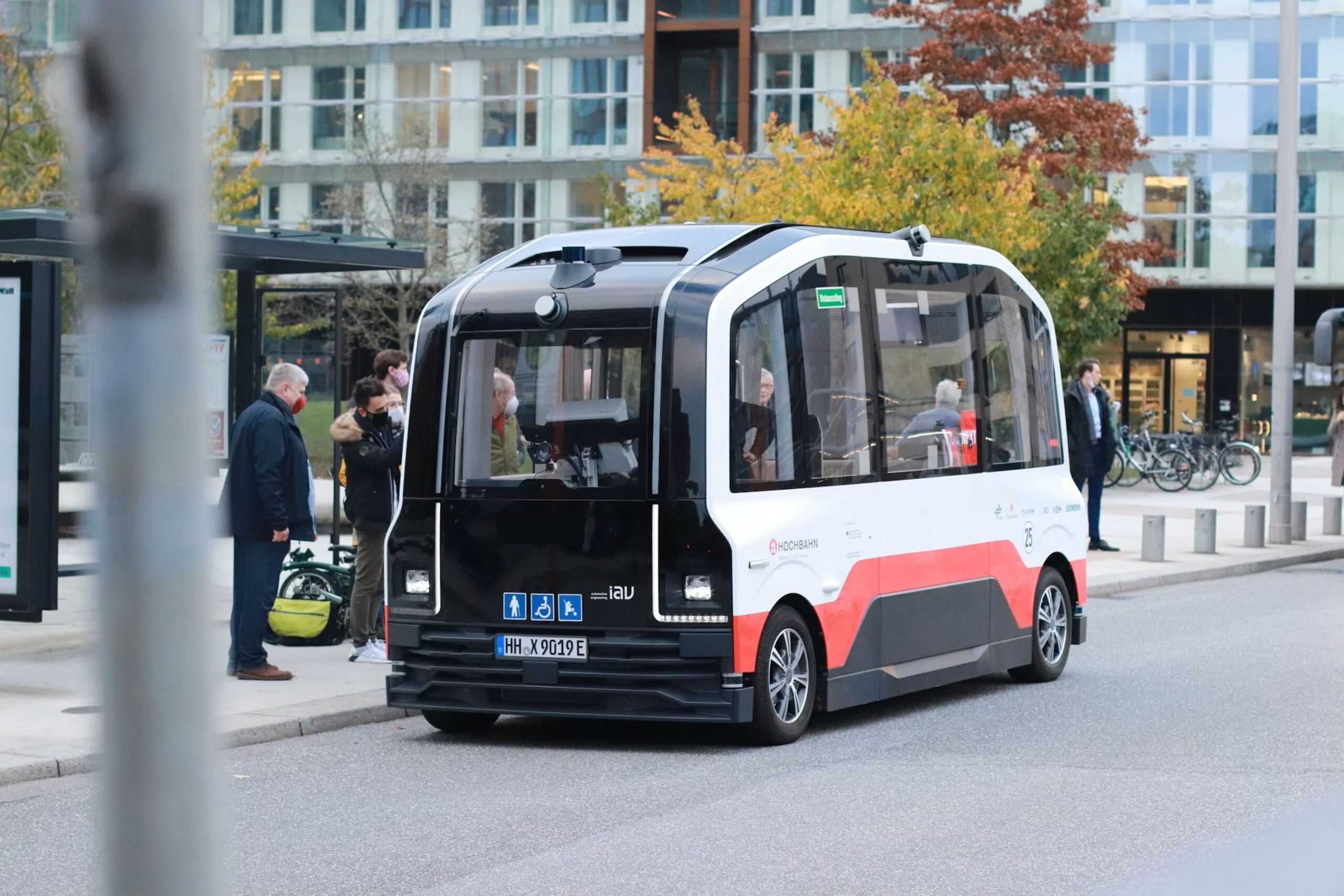
The overarching goal of this project is to investigate user’s willingness to use Autonomous Mobility on-Demand (AMoD) services and identify factors that affect the acceptance of this service and the associated new technologies. The study extends previous research on MoD and AMoD by jointly studying the automated vehicles and MoD services and profiling users in a way that results become customized to the specific needs of each user class (for example Vulnerable Road Users- VRUs, such as elderly). Utility models are produced able to describe potential users’ characteristics, trip characteristics and service characteristics that increase the attractiveness of new AMoD services.
How We Contribute
DSAIT team performed a thorough literature review which can be summarized into six research directions that will potentially determine the levels of acceptability of future AMoD services:
- Availability and quality of data on users and their choices
- AMoD service specifications
- Effects of automation
- Negotiation and routing schemes
- Aspects of travel happiness and long-term engagement with the service
- Behavioral disaggregation to activities and associated choices.
Based on these findings, our team designed and conducted a large-scale questionnaire survey in order to understand the factors that may affect the AMoD acceptability in relation to existing modes and price versus time negotiation schemes, mobility and activity profiles, attitude towards technology and automation, as well as demographic characteristics. Using a three-level approach, we managed to separate the respondents into eight discrete profiles, based on the usual purpose and the number of their trips: commuters and non-commuters and multimodal users, private vehicle users, public transport users and soft mode users of the two initial classes. Furthermore, based on their answers about autonomous driving, the respondents can be separated into three well-separated profiles: AV-supporters, Av-sceptics and Anti-AV travelers.
Applying the novel concepts of permutation feature importance and partial dependence, we were also able to extract the effect of each variable on the final outcome, i.e., the mode choice. It was shown that, except from each alternative’s specifications (travel time, cost and walking time), which are very significant variables, the developed user mobility and AV related profiles, along with age and gender play also a very important role.